
Deep Dish Dungeon Iron Rod: Find, Smelt and Spend It
The material that decides whether you build a Workbench this run or walk back up empty-handed.
Last updated: 2026-10-27
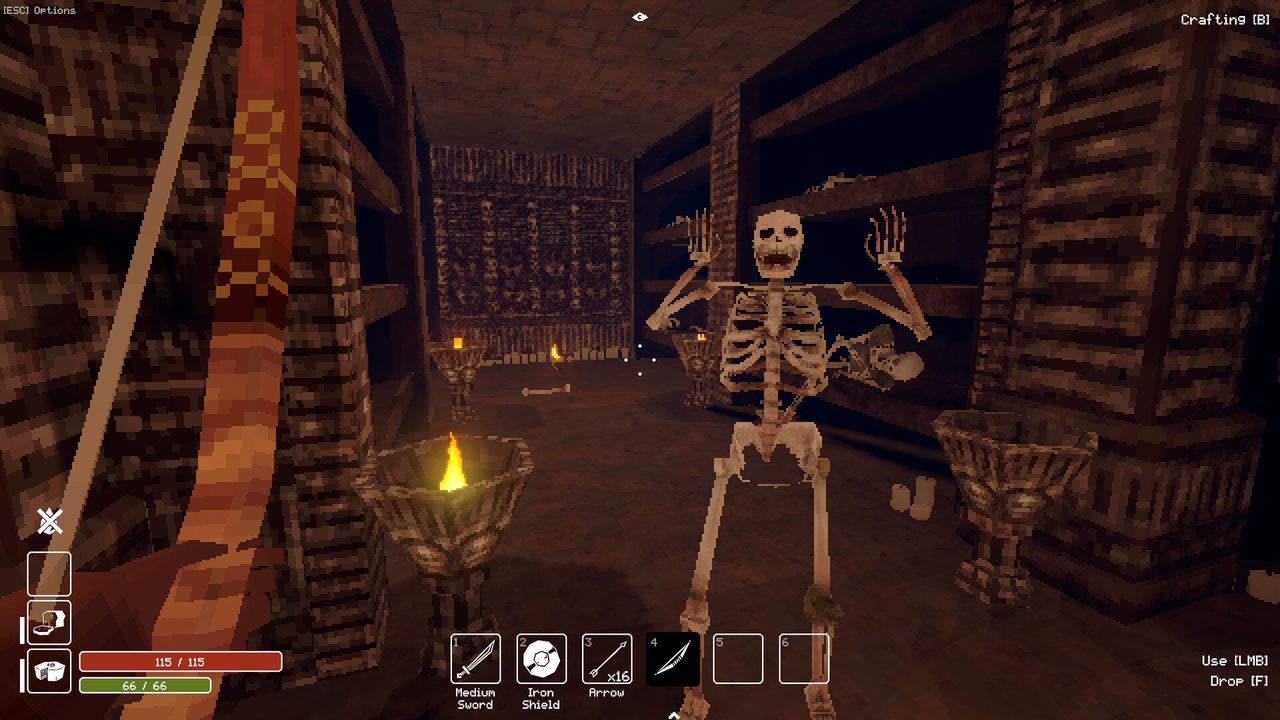 Official media
Quick answer
Iron rods come from three places: lying in the prison, inside chests, and out of a Smelter at roughly 3 Scrap Metal per rod. The mistake that ruins runs is spending your only rod on a Nail before the Workbench or the prison lever is repaired.
Three ways to get one
Pickups come first because you cannot smelt anything until you have built a Smelter, and building one needs clay you probably have not mined yet.
- Pick them up. Rods lie on the ground in the prison cells, and early chests hold one now and then.
- Open chests. The spider area has a chest with two rods in it, which is the single best early find.
- Smelt them. A Smelter takes Scrap Metal and Coal; players report three Scrap Metal per rod.
The Smelter itself costs 5 Clay and 5 Scrap Metal, and requires the pickaxe before you can gather either at scale. That ordering is why the smelter is a mid-game solution rather than an early fix.
The smelter ratio, and what nobody knows
Three separate reports describe the same conversion in different words: nine Scrap Metal producing three rods, three Scrap Metal per rod, and "three scrap metal plus coal". Mathematically they agree, so 3:1 is the number to plan around.
Coal is the second input, and the smelter will not fire without it. The cheapest steady supply comes from your own campfire: every piece of fuel that burns out sometimes leaves a lump of coal beside the fire, which the smelter and the Oven both take.
Smelter is not the Big Smelter
The one you build takes clay and makes iron rods. The Big Smelter already stands in the dungeon, needs 5 Coal and 8 Scrap Metal, casts keys from molds, and needs no clay at all. Two different machines, two different jobs.
Every recipe that wants a rod
Iron rods disappear faster than most players expect, because they sit inside the two stations you build first.
| Recipe | Rods needed |
|---|---|
| Padded Leather Armor | 5 |
| Iron Shield | 5 |
| Harpoon | 3 |
| Cooking Pot | 3 |
| Hammer | 2 (3 before patch 1.0.51.0) |
| Workbench | 2 |
| Axe | 2 |
| Chains | 2 |
| Hook | 1 |
| Long Bow | 1 |
| Water Pot | 1 |
Patch 1.0.51.0 cut one rod off the hammer, which is a small change with a large effect: the Workbench plus the hammer used to cost five rods and now costs four. Guides written before 23 October still print three for the hammer.
The goo piles are the real supply
The largest single source of iron rods is not a chest, it is a wall of yellow slime. Every piece of goo you clear has a small chance to drop one item, and the drop table is clay first, then iron rod, stick, rock or scrap metal.
One structured table counts 33 goo pile nodes in the Sewers, 2 in the Prison and 1 in the Small Cave. Another source lists respawning loot spots in the Prison (4), the Crypt (2), the Library (1) and the Sewers (1), which is what makes a second pass through a cleared region worthwhile.
You need the pickaxe for any of it. That is the same pickaxe the prison hides, which is why the key chain and the iron rod shortage are the same problem.
Rod drops are the second most likely result after clay, so a full sewer sweep pays better than the one chest everyone mentions. The chest is memorable because it is quick, not because it is generous.
Do not spend the last rod
Two traps catch new players, and both involve a cheap recipe that looks harmless.
- The Nail. One rod, and it feels free. Then the Workbench cannot be built, and the run stalls in a corridor with no crafting.
- The prison lever. It needs a rod to repair, and the mechanism will not tell you that until patch 1.0.50.0 or later is installed.
The rule that works: keep one rod unspent until the Workbench exists, and keep a second until the prison lever is fixed. Everything else can wait for the next trip.
Three stages of supply
The right answer changes as the run progresses, and using the late answer early wastes an hour.
- Your first rod: pick it up. The prison cells and the spider-area chest are the only sources before you can smelt anything.
- Two to five rods: clear goo piles. The drop table favours clay but rods turn up often enough that a full sewer pass usually pays for a Workbench.
- Five or more: build the Smelter. Three scrap metal per rod, and by then scrap is the material you have most of.
The transition point is the smelter, and the smelter needs clay, which needs the pickaxe, which is inside the prison — the same loop that makes the key chain and the rod shortage one problem.
When you are genuinely short
Go back to the sewers with the pickaxe and clear goo piles you walked past, rather than hunting chests you have already opened. Chests are one-shot; goo piles and respawning nodes are not, and a single cleared corridor usually pays out two or three rods.
If the shortage is early enough that you have no pickaxe, the answer is not the smelter at all — it is the two rods in the spider-area chest and whatever the prison cells are holding. Both are reachable before you can produce anything, which makes them the correct first stop rather than a fallback.
Quick answers
Where do I find iron rods?
In prison cells, in chests (the spider area has two), and from a Smelter at about three Scrap Metal per rod.
How much Scrap Metal per rod?
Three Scrap Metal, according to player reports, plus the coal the smelter needs to fire at all. The scrap is the number to plan around.
How many rods does the Hammer need?
Two since patch 1.0.51.0. It was three before that, which is why older guides disagree.
Why am I always out of rods?
Because the Workbench, hammer, axe and cooking pot between them want nine. Clear goo piles with the pickaxe rather than relying on chests.
Confidence note
The three acquisition routes and the recipe table are consistent across the two structured databases checked on 2026-10-27. The 3:1 smelter ratio is player-reported rather than official, and the coal input is unquantified in every source used here.
Next Steps
The deep dish dungeon axe exists in two forms and no hatchet, cuts only brown roots, and must be found before you can craft one. Three reported locations.
Deep dish dungeon clay comes from yellow goo piles and a pickaxe, not chests. Drop rules, the four recipes that eat it, and why the Big Smelter needs none.
Need Help?
Related Reading
A deep dish dungeon guide that follows the real gating order: full stomach, hammer, pickaxe, axe, statue puzzle, four gems, then the final fight.
A deep dish dungeon wiki built on the live build: 22 treasures, 23 achievements, eight crafting stations plus anvil, three bosses and the area names.