
Deep Dish Dungeon Clay: Goo Piles and Four Real Costs
The bottom of the crafting chain: clay makes the smelter, the smelter makes the rods, and the rods make everything else.
最后更新: 2026-10-27
本页尚未提供中文版本,以下为英文原文。
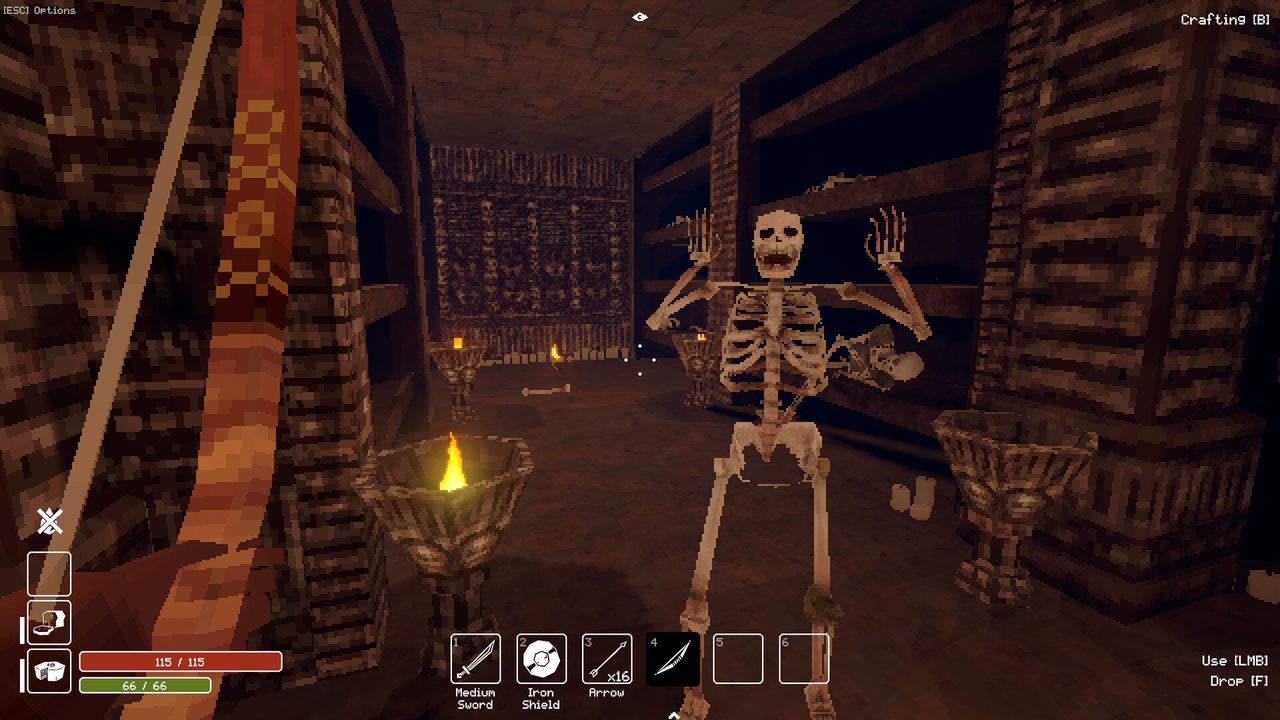 官方素材
Quick answer
Clay comes from yellow goo piles, broken with a pickaxe, one piece at a time. It is the most common drop from a pile but not a guaranteed one. Four recipes consume it: Oven (5), Smelter (5), Water Pot (4) and Statue Mold (up to 16).
One source, and one tool
There is no second way to get clay. Chests do not hold it, enemies do not drop it, and the only node that produces it is the yellow goo pile you have been walking past in the sewers.
A goo pile is made of several pieces. Each pickaxe hit clears some of them, and each cleared piece has a small chance to drop one item. Clay is the most likely result, followed by an iron rod, a stick, a rock or scrap metal — which is why a pile can feel like it gave you nothing.
Players report three to five clay from a pile, and the spread is real rather than a rounding error. Clear every pile you pass instead of judging by the first two swings.
Where the piles are
Most goo piles sit in the sewers, with a few elsewhere and two named spots that respawn. Patch 1.0.50.0 also repositioned the prison piles so they are easier to spot, which is worth knowing if you searched that region on an older build.
One structured count lists 33 goo pile nodes in the sewers, 2 in the prison and 1 in the small cave. Those are nodes rather than piles, so treat the number as a scale reference, not a shopping list.
You need the pickaxe before any of it works. In the full game the first pickaxe lies in the dungeon — one walkthrough places it down the stairs beside the original prison-entry staircase, behind the lower locked door, with archers above. Since patch 1.0.51.0 the Workbench also carries a pickaxe recipe, but only after you have held one.
The four things clay builds
Clay is cheap per unit and expensive in total, because two of its four uses are stations you only build once and two are repeatable.
| Recipe | Clay | Why you want it |
|---|---|---|
| Oven | 5 | Baking pies, pastries and the final pizza |
| Smelter | 5 | Turning scrap metal into iron rods |
| Water Pot | 4 | Water for dough, potions and cooking |
| Statue Mold | 16 | One statue for the crypt puzzle |
The Statue Mold is the outlier: it holds up to 16 clay and produces a single statue, which means a second statue costs another 16. That is the most expensive thing clay does, and it is why the statue puzzle is a materials problem as much as a logic one.
What clay does not build
The Big Smelter needs no clay. It stands in the dungeon already, takes 5 Coal and 8 Scrap Metal, and casts keys and key pieces from molds. Every item list that groups it with the buildable smelter is wrong in a way that sends players mining for clay they do not need.
The other persistent myth is that clay comes from pots or crates. It does not. If a guide tells you to break pottery for clay, it is describing a different game.
The chain clay actually starts
Clay → Smelter → iron rods → Workbench, hammer, axe and cooking pot. Fix clay and the rod shortage usually fixes itself. That is why the first five clay of a run are worth more than the next twenty.
How much clay a camp actually needs
Add the four costs and a full camp wants at least thirty clay: five for the Smelter, five for the Oven, four for the Water Pot and sixteen for the first statue. A second statue pushes that to forty-six, and a broken one pushes it higher.
That total assumes no upgrades and no waste, which is not how runs go. Budget nearer fifty for a completion-minded save, and closer to thirty-five if you skip the statue puzzle entirely.
At three to five per pile, thirty clay is roughly eight good piles, and the sewers hold most of them. Two spots reportedly respawn, which makes a second pass through a cleared region worth the walk.
Clay you do not get by accident
Every other early material has a habit of arriving unbidden — wood from roots, scrap from slime, coal from a finished fire. Clay does not. Chests ignore it, enemies ignore it, and the pottery you break for fun yields nothing at all.
So "where did all my clay go" is almost always answered by a station you forgot you built. The Oven and the Smelter are five each, and building both in one session leaves an empty bag and a very complete camp.
Getting stuck in the mushroom cave
There is a documented softlock worth knowing about: a player used a plank to enter the glowing-mushroom cave before clearing its goo, and could not get back out. The cave is not a bug, but the route in is one-way enough to trap you.
The general escape is the pause menu's Starve to Death, which returns you to your last save. It costs a run, not a save file, and it is the supported answer to being sealed in.
Clay in the demo
If you are playing the free demo, clay is not there. The developer said directly that clay and the pickaxe were added for the full release, and neither the axe nor clay appears in the demo build.
That means the yellow goo piles you find in the demo are decoration. No pickaxe, no drops, no amount of hitting them will change that — a point worth remembering before you report a bug against a build that was never meant to have the material.
Quick answers
How do I get clay?
Break yellow goo piles with a pickaxe. Each piece has a chance to drop clay, and a pile usually yields three to five across all its pieces.
Do chests or enemies drop clay?
No. Goo piles are the only source, with a couple of respawning spots in the sewers.
How much clay do I need?
Five for the Oven, five for the Smelter, four for the Water Pot, and sixteen per statue at the crypt mold.
Does the Big Smelter need clay?
No. It needs 5 Coal and 8 Scrap Metal plus a mold, and it is already built when you find it.
Confidence note
The drop rule, the four costs and the pickaxe change are cross-checked between NPC Tips' file analysis, the Fextralife material table and the official 1.0.51.0 notes on 2026-10-27. The three-to-five figure is a player-reported range, not a data-mined one.
接下来看
Where to get deep dish dungeon iron rod: prison pickups, spider-area chests and the 3-to-1 smelter ratio, plus every recipe that quietly eats your stock.
The deep dish dungeon axe exists in two forms and no hatchet, cuts only brown roots, and must be found before you can craft one. Three reported locations.
相关阅读
A deep dish dungeon guide that follows the real gating order: full stomach, hammer, pickaxe, axe, statue puzzle, four gems, then the final fight.
A deep dish dungeon wiki built on the live build: 22 treasures, 23 achievements, eight crafting stations plus anvil, three bosses and the area names.